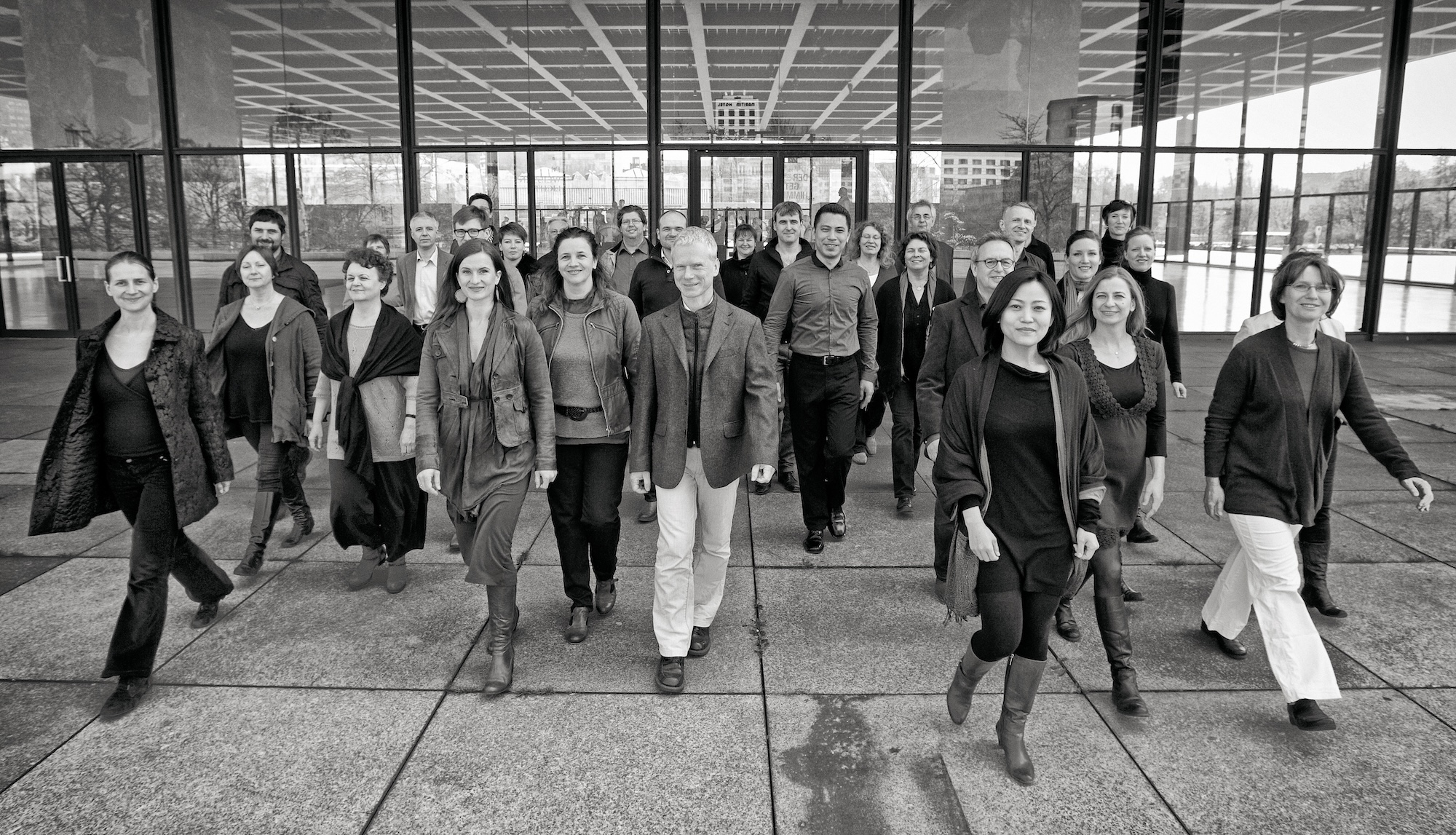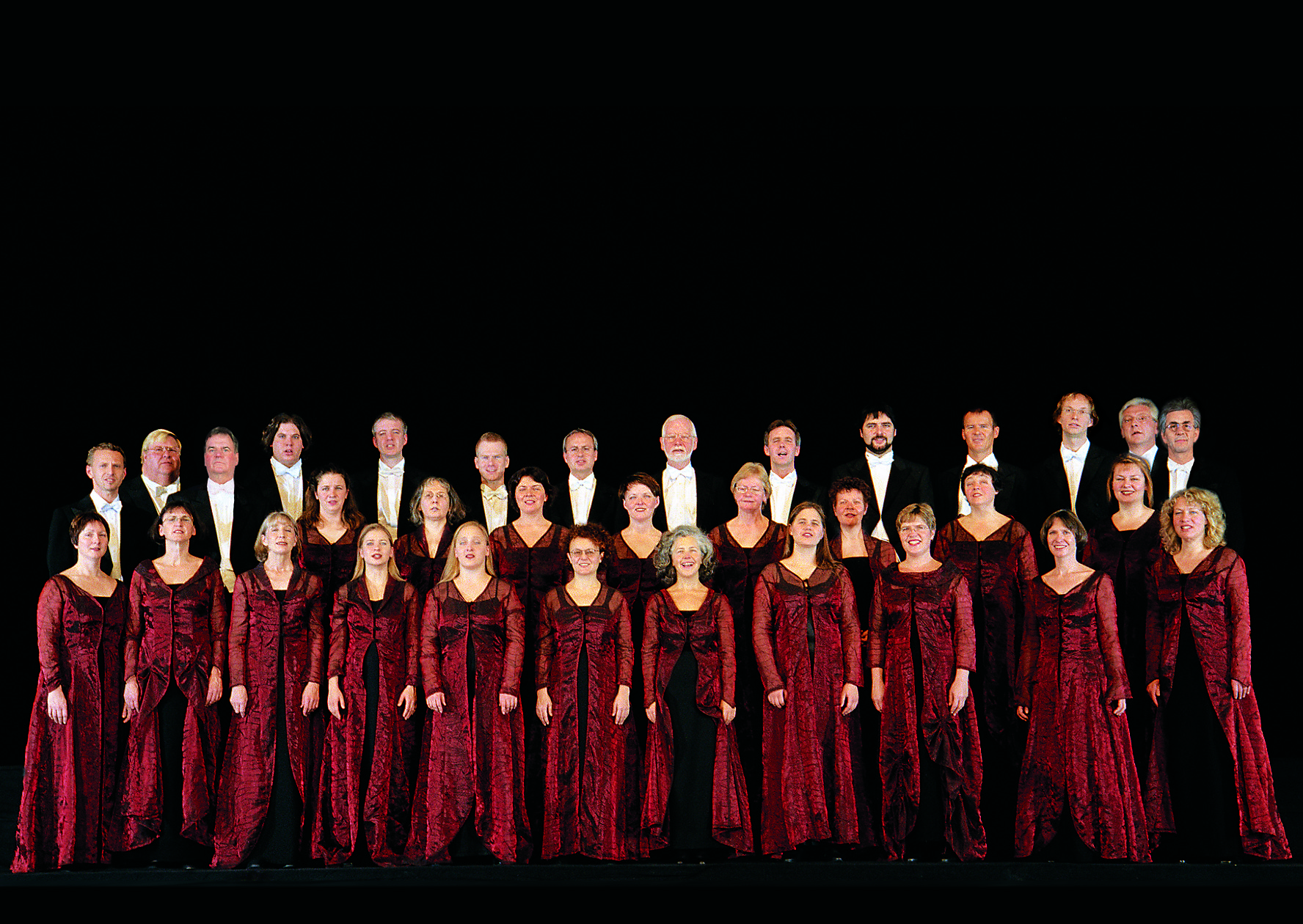
The RIAS Kammerchor celebrated its 75th birthday on October 15, 2023. For a person, that would be a respectable age and often the time to gradually withdraw from public life. For a choir, however, 75 years of existence is the best proof that artistic quality and organizational structures can function perfectly well across several generations and despite the various pitfalls of contemporary history. Congratulations on your anniversary!
RIAS: a name that inspires
Over the past 75 years, the RIAS Kammerchor has become a hallmark of quality in Berlin, ranking alongside institutions such as the Charité hospital (since 1710), the Kindl Brewery (since 1872), the Berlin Philharmonic Orchestra (since 1882), the Rausch chocolate factory (since 1918), and serial champions Alba (since 1991). People have grown accustomed to the name, which has remained unchanged since the choir was founded in 1948, except for the elimination of the hyphen. Nevertheless, or perhaps precisely because of this, it is worth reflecting briefly on the two words contained in the name: RIAS – With the slogan “A free voice of the free world,” Radio in the American Sector was a dominant media voice from 1946 throughout the entire period of German division, reaching millions of listeners in both West and East. Five ensembles – symphony orchestra, boys’ choir, chamber choir, chamber orchestra, and dance orchestra – were at times sponsored by RIAS, three of which have long since been disbanded and the symphony orchestra renamed. Only the RIAS Chamber Choir has retained the four-letter abbreviation in its name, thus referring to an important turning point in Berlin’s history to this day.
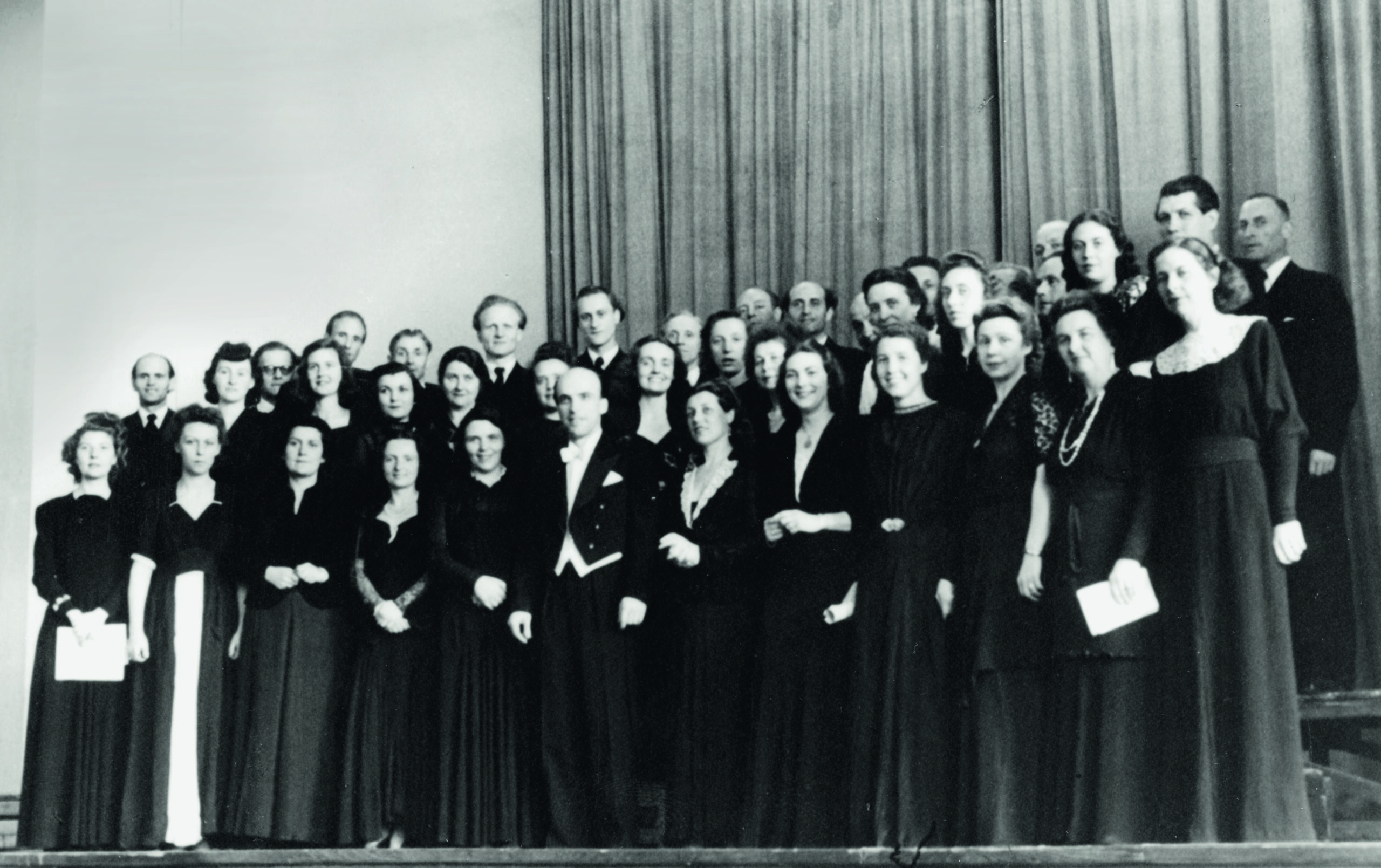
Chamber choir – A chamber choir with more than 30 singers? In today’s age of small vocal ensembles, this seems rather large and raises the question of how big the chamber must be to accommodate all the choir members. But the term here refers to the standards of the 1940s and 50s, when a conventional radio choir was at least twice, and often three times, as large. Whatever the reasons why those responsible at RIAS decided to keep the choir relatively small at the time, this decision proved to be extremely far-sighted: with its size and highly transparent sound, the choir became a specialist ensemble for historical performance practice by the 1980s at the latest.
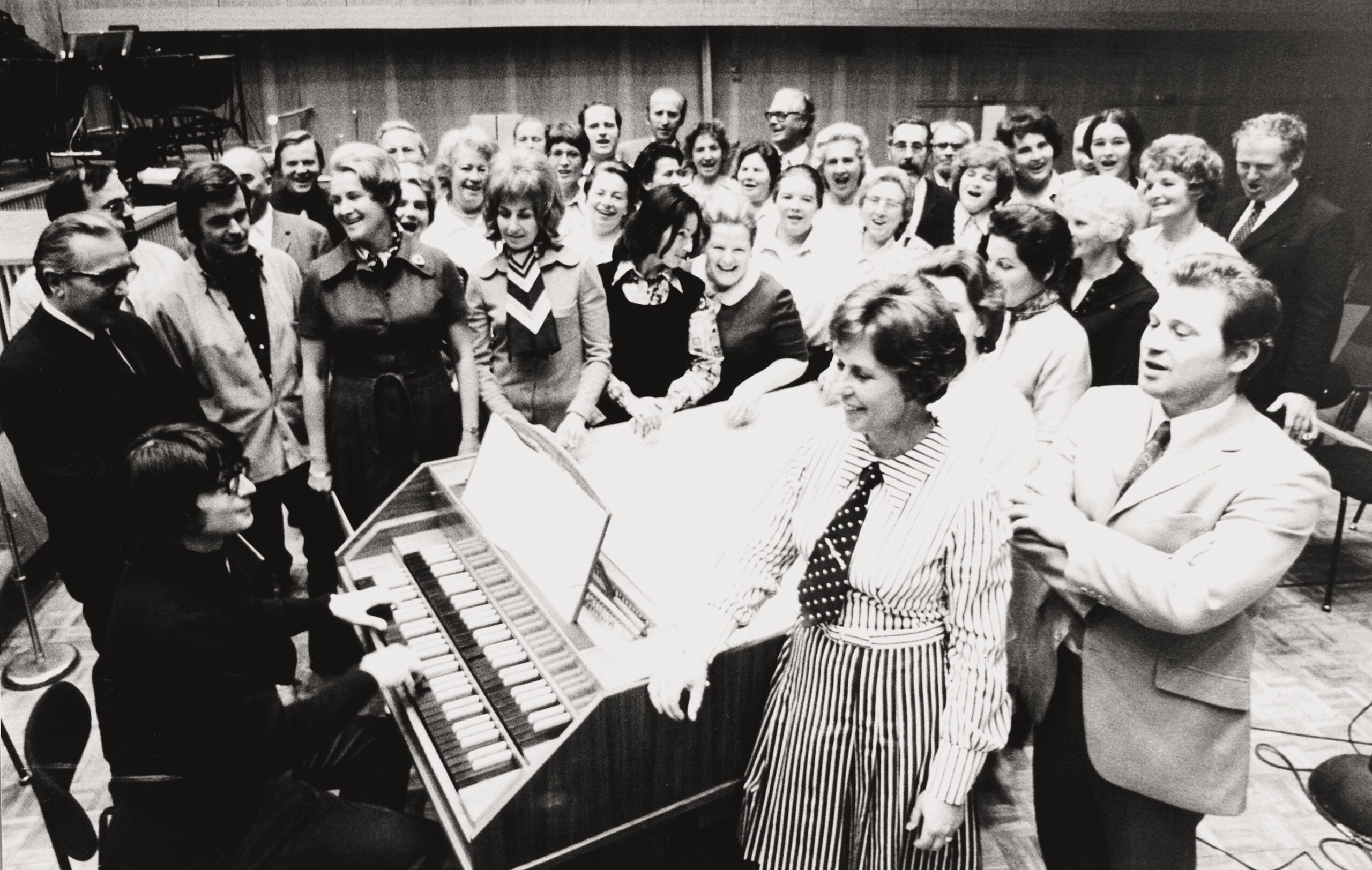
Small gallery: Eight gentlemen on the conductor’s podium
If there is a “founding father” of the RIAS Kammerchor, it is Karl Ristenpart. He was commissioned to establish the RIAS ensemble in February 1946 and put together a highly capable vocal ensemble during the difficult post-war years. Numerous recordings of works ranging from Monteverdi to Bach, Mahler, and Schoenberg demonstrate his high artistic and organizational skills. The first principal conductor after the official founding of the RIAS Kammerchor in October 1948 was Herbert Froitzheim, who, as a strict choir teacher, laid the technical foundations for the choir’s quality. In 1954, the energetic Berlin choir teacher Günther Arndt took over and led the choir through every conceivable musical realm for a full 18 years. The RIAS Kammerchor was often heard alongside the Berlin Philharmonic or the Radio Symphony Orchestra, but also enjoyed venturing into light music. In order not to compromise the choir’s serious reputation with recordings such as “Weihnachten mit Rudolf Schock” (Christmas with Rudolf Schock) or “Schwarzwaldmädel – Querschnitt” (Black Forest Girls – Cross-section), Arndt unceremoniously and completely immodestly named his ensemble the “Günther Arndt Choir.”
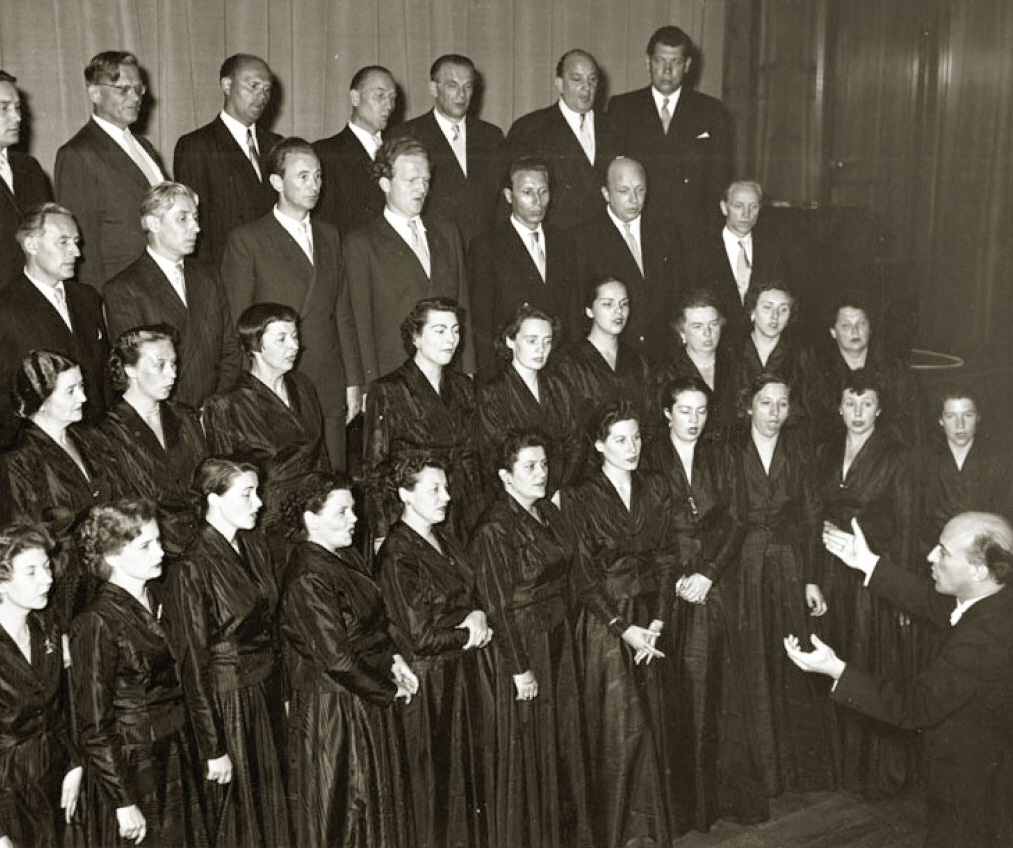
A turning point in the choir’s history came in 1972 with the appointment of Uwe Gronostay. Productions with Vico Torriani and Brigitte Mira were now a thing of the past; instead, the new director focused primarily on a cappella culture. Over the years, Gronostay patiently trained his singers to become an absolutely homogeneous ensemble of professional soloists, using the Swedish Radio Choir under Eric Ericson as a model for its tonal perfection.
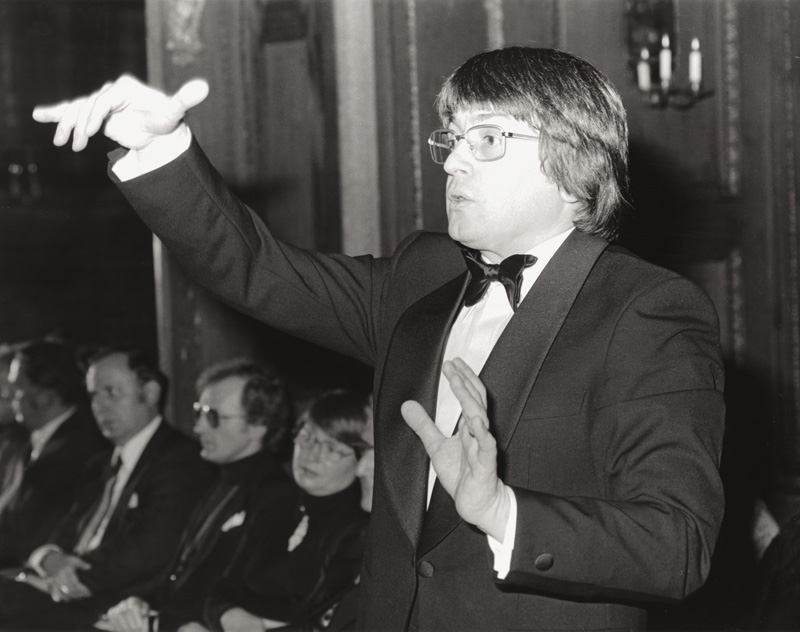
Under Gronostay’s leadership, the RIAS Kammerchor developed its lean, transparent sound, which remains its trademark to this day. There were also organizational changes: Gronostay, who was later named honorary conductor, established the tradition of New Year’s concerts in 1983, greatly revitalized the choir’s touring activities, and created a direct link between training and choral practice by establishing the “Radio/Concert Choir” program at the Berlin University of the Arts. From 1986, Marcus Creed, the next chief conductor of the RIAS Kammerchor, understood how to apply the sound ideals developed by Gronostay to a new repertoire, with early music playing a leading role in the guise of historical performance practice. At the same time, the choir’s collaboration with external specialists such as René Jacobs and Philippe Herreweghe increased. Creed’s successor, Daniel Reuss, who led the choir from 2003 to 2006, championed the sharpened polarity between early and new music in many projects.
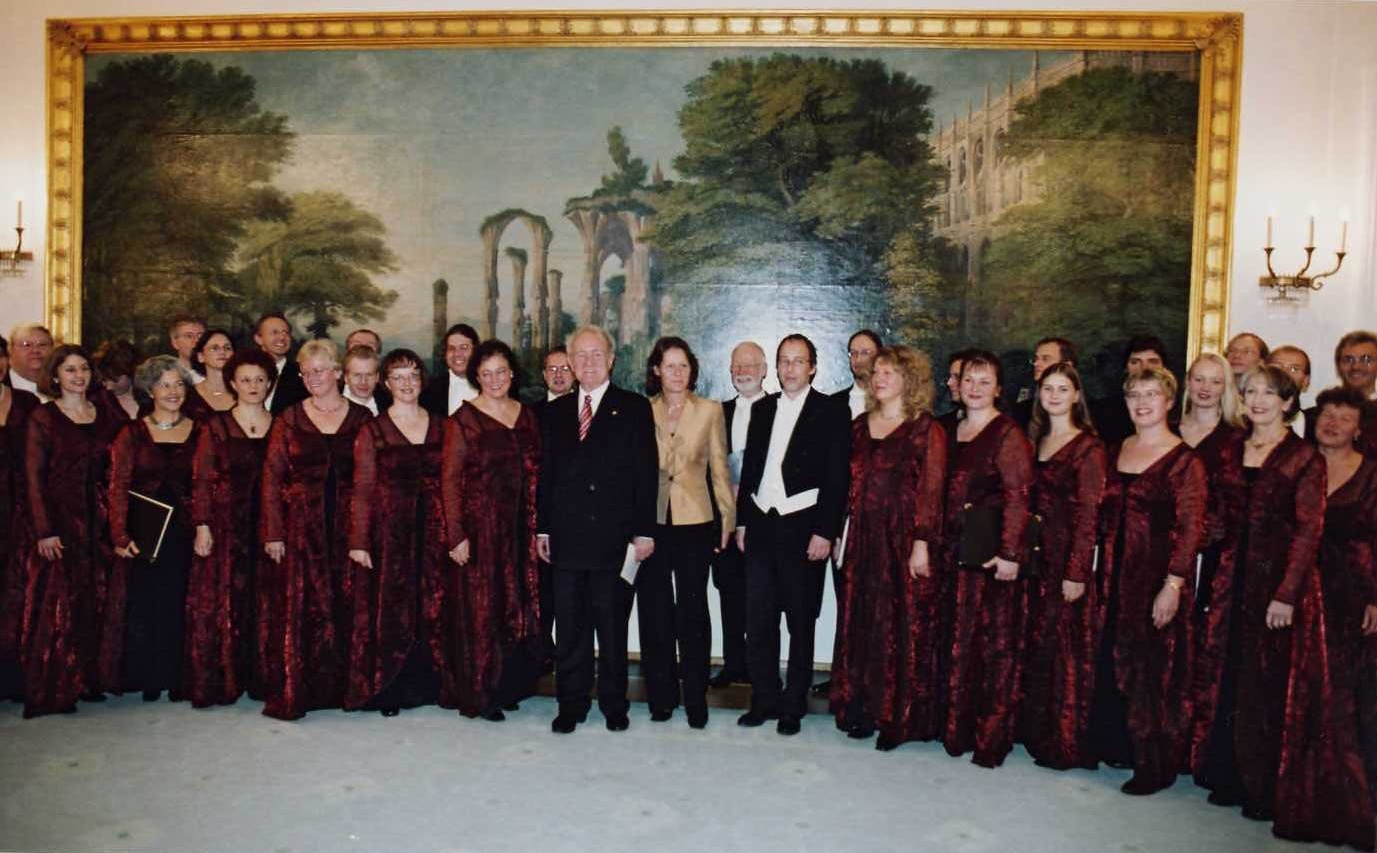
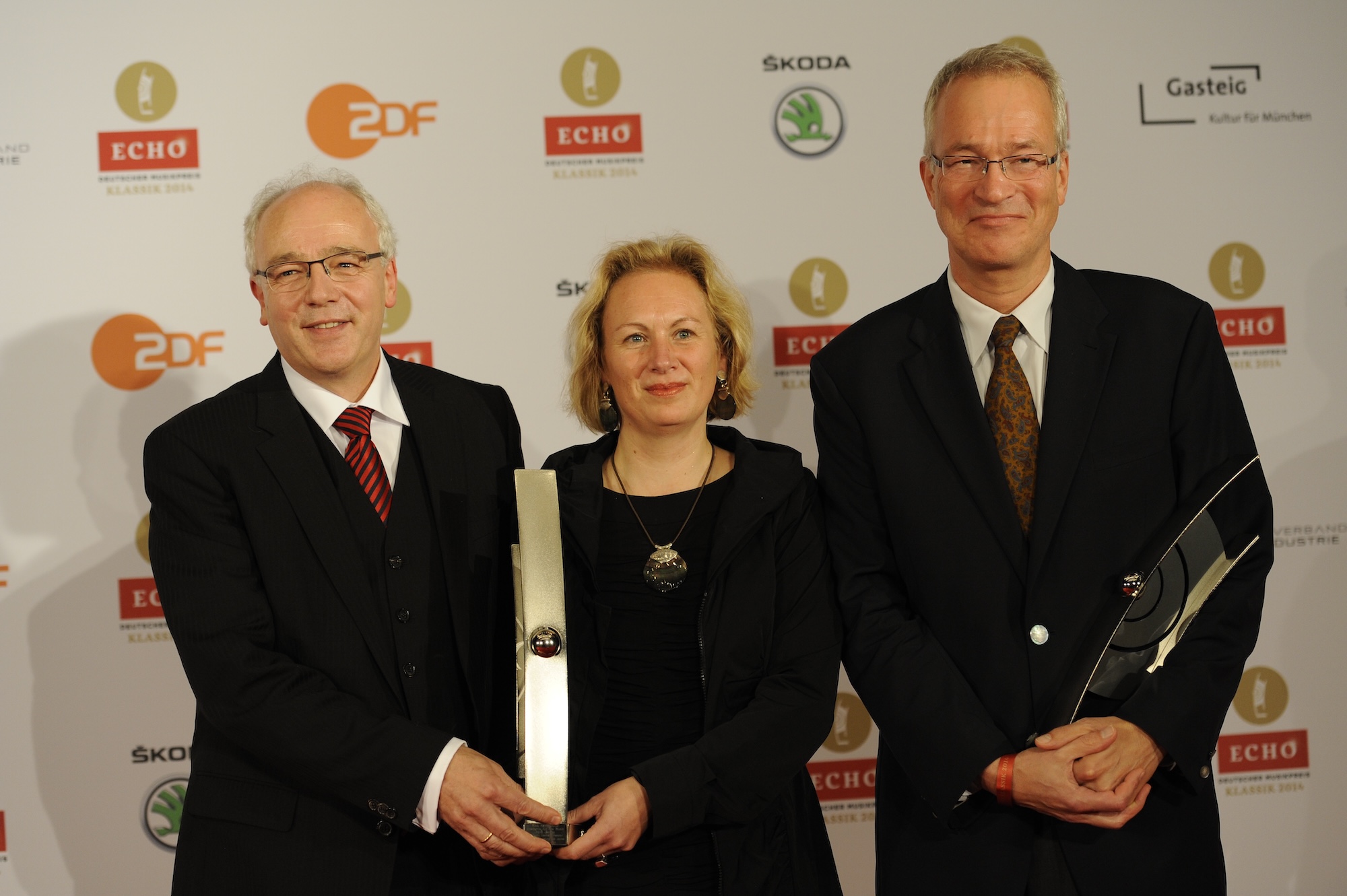
Hans-Christoph Rademann took over as choir director in 2007. With his extensive expertise in historical performance practice, he focused the choir’s program on the works of the Bach family, but also integrated numerous contemporary works and world premieres into the concerts. Among the choir’s many awards, one from 2010 stands out in particular, when the British magazine Gramophone voted the RIAS Kammerchor one of the ten best professional choirs in the world. Justin Doyle has been the choir’s principal conductor since 2017.
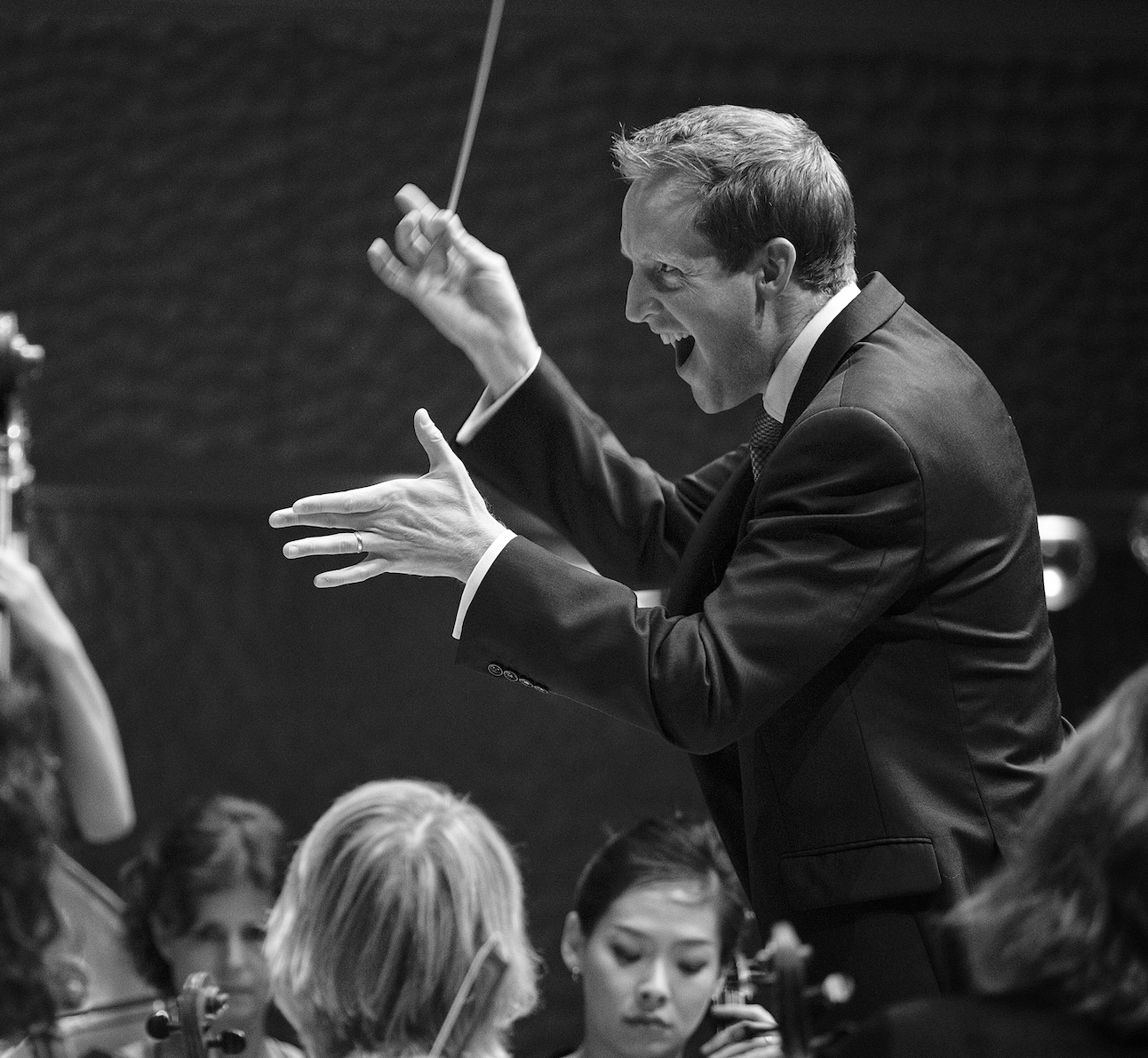
He continues to enrich the ensemble’s work with a broad repertoire, setting standards with Handel performances and completing a cycle of full-length commissioned works. Not to be forgotten is the “silent” period of the coronavirus pandemic, during which the choir lost none of its charisma thanks to its dedicated leadership and even recorded CDs under the most difficult conditions. In view of this gallery of eight outstanding gentlemen, the only question that remains is when the first female chief conductor can be expected at the choir’s podium…
Change and continuity: How is a radio choir defined?
The great success of the RIAS Kammerchor is based not only on its breathtaking musical quality, but also on its ability to regularly redefine its role in a rapidly changing media world. The ensemble was founded as a classical radio choir with the clear task of filling the radio program with productions. The number of live recordings and tape recordings in the early years was correspondingly high. The choir also participated in the great boom in record sales from the 1960s onwards, but less with its own productions and more as an “accompanying ensemble” for various orchestras. It proved to be an advantage that, from the outset, the choir was not necessarily associated with the in-house RIAS Symphony Orchestra (later the Radio Symphony Orchestra and today the DSO), but also performed with the Berlin Philharmonic, the orchestra of the Deutsche Oper, the Berlin Symphony Orchestra, and other ensembles. The choir then completely redefined itself at the end of the 1980s: with the establishment of a subscription series in the newly built chamber music hall of the Philharmonie, its concert activities in Berlin took on a whole new significance from 1988 onwards, with selected programs being specifically linked to CD recordings.
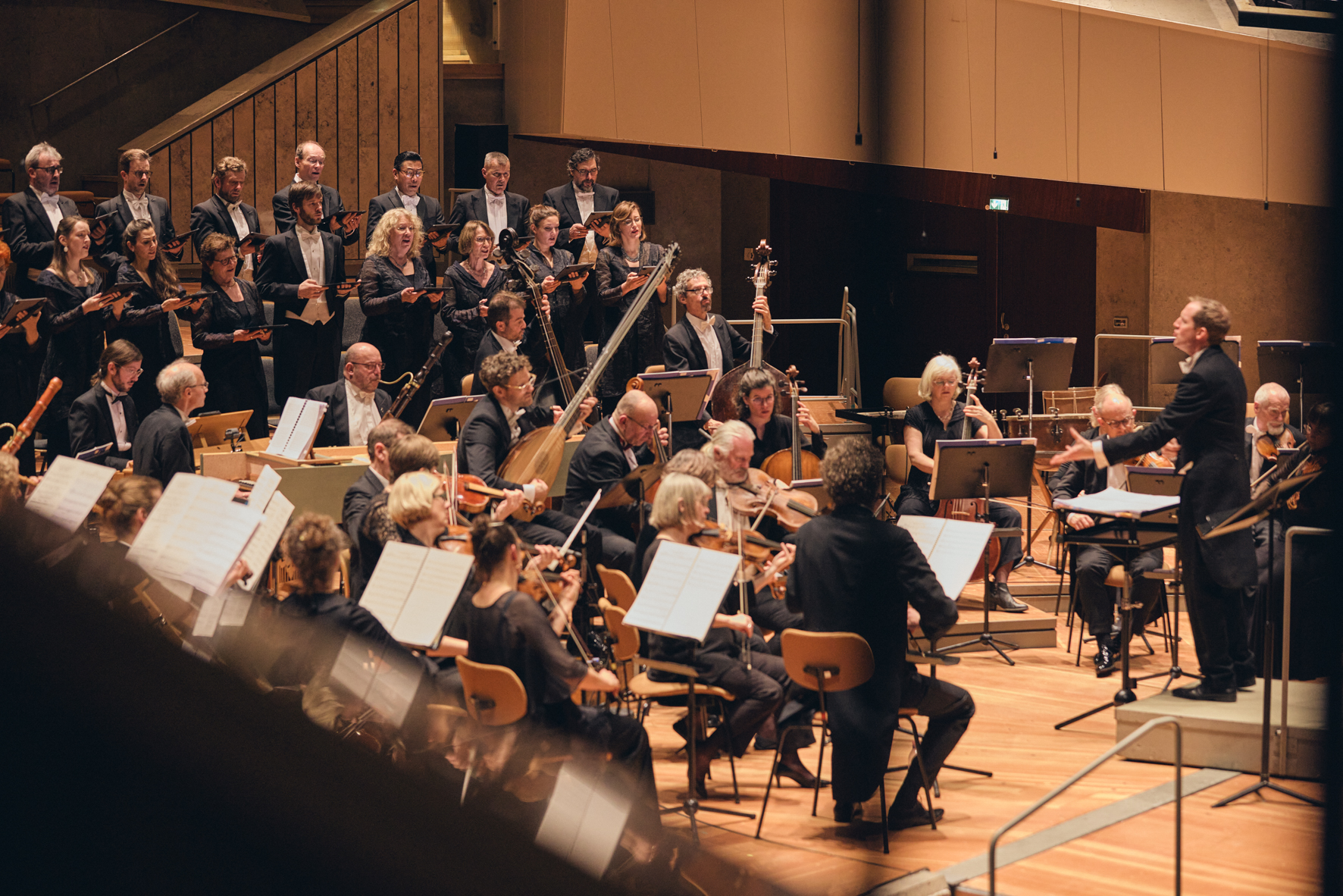
German reunification in 1992 provided the choir with an ideal instrumental partner for Baroque music in the form of the Akademie für Alte Musik Berlin, which is reflected to this day in numerous concert projects and award-winning recordings. In addition, there has been fruitful collaboration with the Freiburger Barockorchester, the Chamber Orchestra of Europe, the Orchestre des Champs-Élysées, the Capella de la Torre, and other ensembles in other projects. Extensive concert tours take the singers from Berlin to all the major venues worldwide, with the “December Tour,” usually featuring a large oratorio work, still holding a special place in the choir’s calendar.
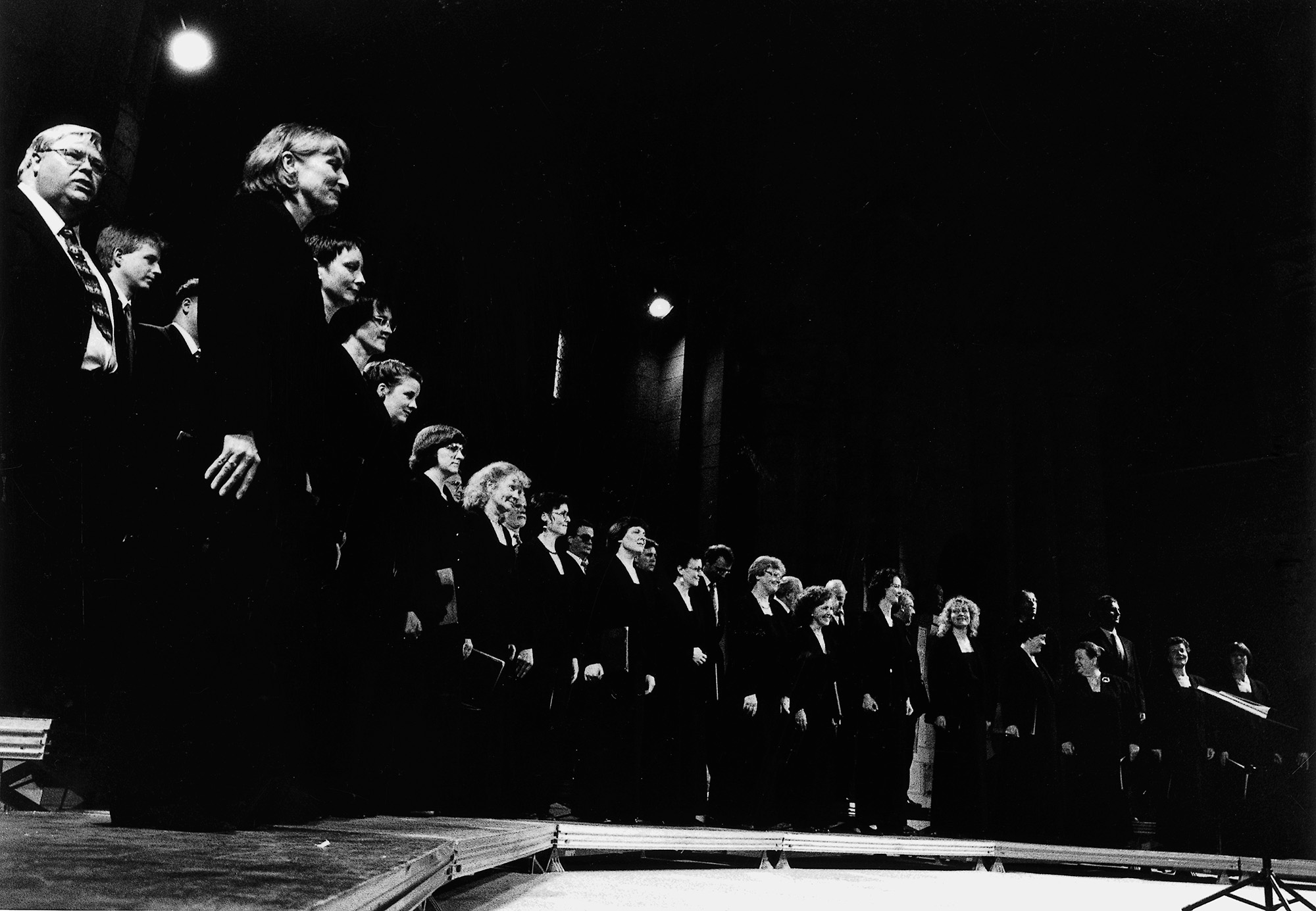
Can this touring and concert choir still be called a radio choir? Of course! Since 1994, the RIAS Kammerchor has been part of Rundfunk Orchester und Chöre gGmbH Berlin, whose shareholders include the federal government (35%), the state of Berlin (20%), Deutschlandradio (40%), and RBB (5%). Most of the choir’s concerts in Berlin are broadcast on the radio and often subsequently picked up by national and international radio stations; of course, the RIAS Kammerchor is no longer – as it was 75 years ago – a “subcontractor,” but a partner of public broadcasting.
Fearless of Dissonance
The appeal of modernity Radio choirs are predestined for the cultivation of contemporary music, on the one hand for organizational reasons, since radio stations pay particular attention to modernity as part of their public mandate, and on the other hand for purely practical reasons, since often only such professional ensembles can master the technical challenges of new music. From its inception, the RIAS Kammerchor saw itself as an important mediator of contemporary works, not least in connection with its politically sensitive location (at least during its first 40 years): Here in Berlin, the inhuman Nazi regime had previously brutally eliminated any attempts at musical avant-garde, while at the same time, behind the sectoral border, a system was established in the GDR that viewed modernism with skepticism and imposed strict censorship. The many world and German premieres that the RIAS Kammerhor sang from West Berlin alone until 1989—works by Arnold Schoenberg, Paul Hindemith, Bernd Alois Zimmermann, Hans Werner Henze, Krzysztof Penderecki, Arvo Pärt, and many others—were indeed the voice of a free (and at the same time wonderfully pure-toned) free world. The choir’s intensive engagement with new music is facilitated by its compact size and the transparent sound it has developed, largely under the guidance of Uwe Gronostay. The RIAS Chamber Choir will continue to be the ideal venue for world premieres and first performances of advanced choral compositions in the future.
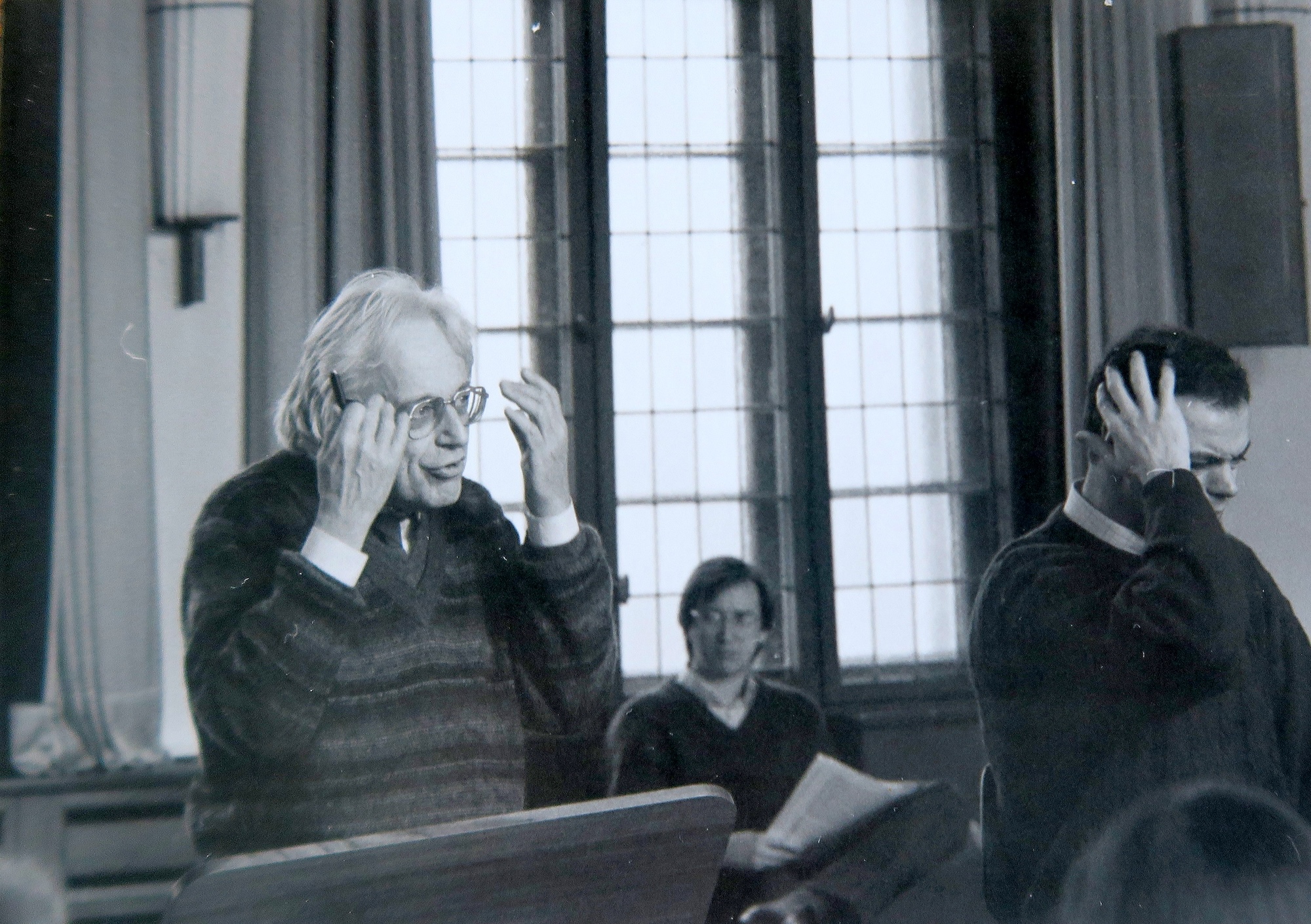
The choir’s intensive engagement with new music is facilitated by its compact size and the transparent sound it has developed, largely under the guidance of Uwe Gronostay. The RIAS Chamber Choir will continue to be the ideal venue for world premieres and first performances of advanced choral compositions in the future.
New Paths: With a Tablet into Kraftwerk Berlin
The RIAS Kammerchor’s constant evolution, while maintaining its consistently outstanding musical quality, is also reflected in its Berlin venues and concert formats.
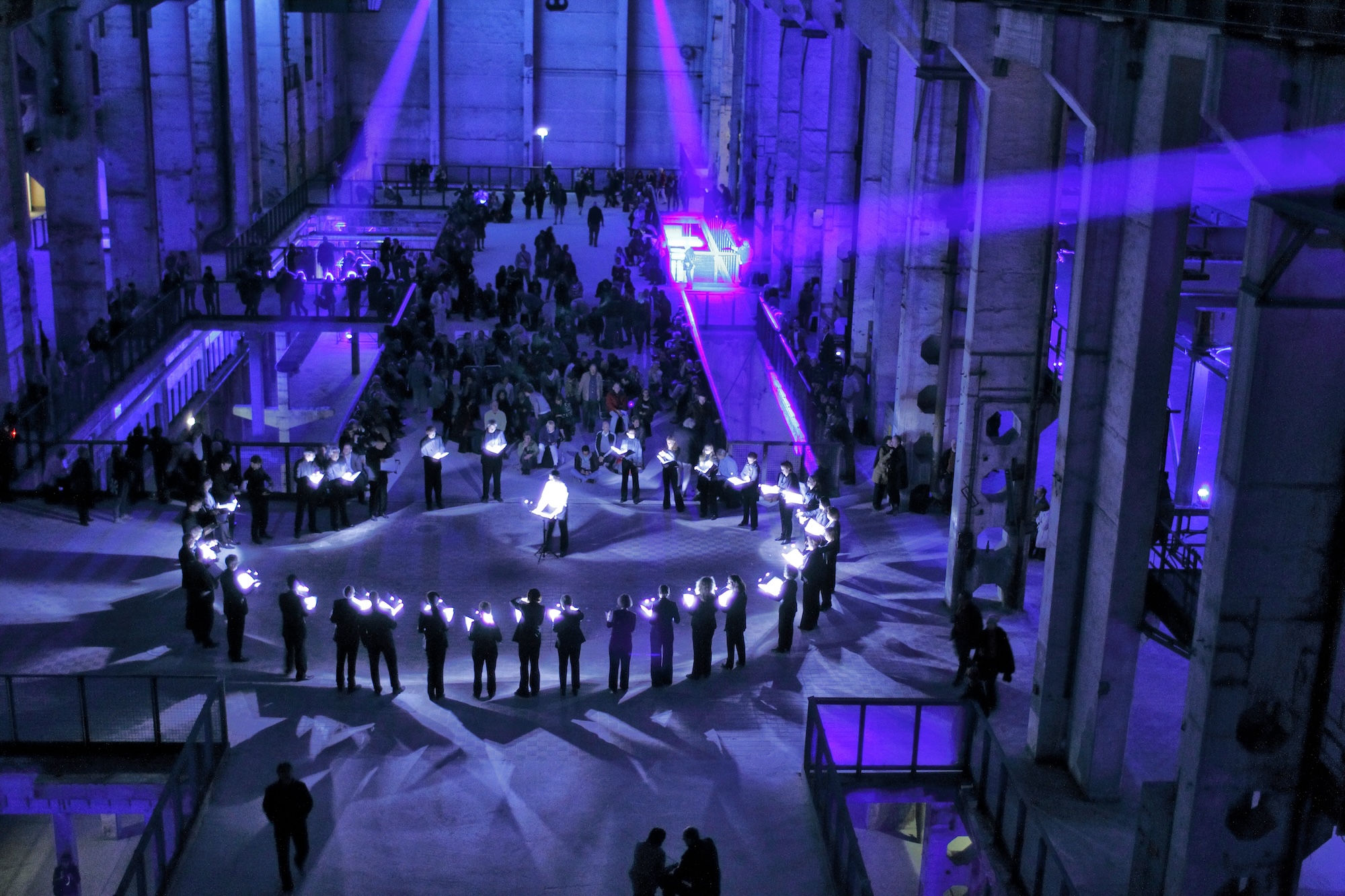
While the choir spent much of its early years in radio studios and broadcasting halls, from the 1960s onwards it began to perform more and more frequently in public concert halls, and from 1987 onwards it preferred to perform in the chamber music hall of the Berlin Philharmonic. At the same time, over the past three decades, there has been a growing desire to perform in other venues in Berlin. Various churches and smaller concert halls became performance venues, but then increasingly unusual locations where the chosen program enters into a special relationship with the space. In its ForumKonzerte series, the RIAS Kammerchor invites audiences to museums and lecture halls, clubs and industrial monuments such as the Kraftwerk Berlin-Mitte. With formats such as these, as well as school choir sponsorships and the promotion of young singers as academicians, the RIAS Kammerchor presents itself as young and contemporary, despite its more than 75 years of existence. And finally, just in time for its anniversary season, the RIAS Kammerchor no longer sings from paper sheet music, but sustainably from tablets. May the batteries of these devices, as well as the funding structures in Berlin and the unique sound of this choir, never run out in the next 75 years.